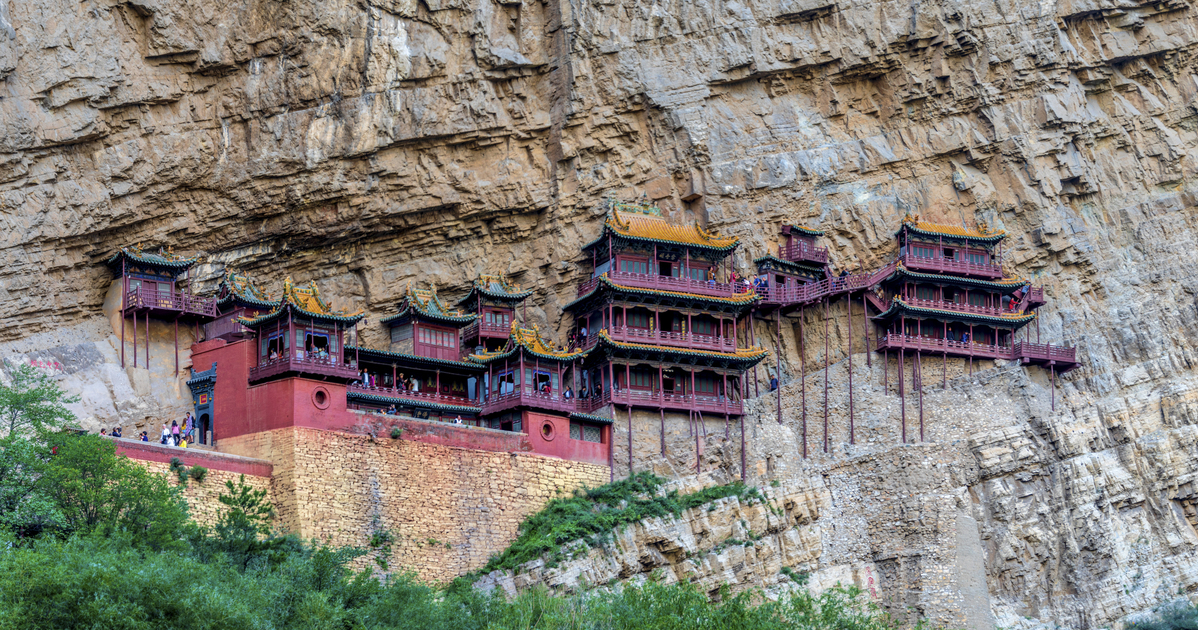
Xuankong Temple
Overview
Xuankong Temple, also known as the Hanging Temple, is a unique and historic site located at Hengshan Mountain in Hunyuan county, Shanxi province, China. This architectural marvel is renowned for its precarious position on the side of a cliff, approximately 60 meters above the ground. Constructed during the late Northern Wei Dynasty (386-534), about 1,500 years ago, the temple is a testament to the extraordinary architectural and engineering prowess of ancient China. Its daring location has earned it a place on Time magazine's list of the 10 most dangerous buildings in the world. Xuankong Temple is an iconic cultural landmark in Datong city, which is known for its rich historical and cultural heritage.
Historical Background
Xuankong Temple was built during the late Northern Wei Dynasty, a period that lasted from 386 to 534 AD. This era is known for its significant advancements in Buddhist art and architecture. The temple was constructed using a combination of wood, tiles, and stones and is composed of two three-story pavilions and a courtyard, all interconnected with staircases and steps. The structure is ingeniously supported by a series of horizontal beams embedded into the rock face of the cliff, rather than the vertical wooden pillars that appear to support it. This method of construction, utilizing the natural features of the mountain, is a hallmark of Northern Wei architectural innovation.
Cultural Significance
Xuankong Temple holds significant cultural importance due to its representation of religious pluralism and architectural mastery. The temple is unique in that it incorporates elements of Buddhism, Taoism, and Confucianism, reflecting the inclusive religious attitudes of the time. It houses over 80 holy statues made of various materials, including bronze, iron, stone, and clay, dedicated to the three religions. The temple's layout and design are rich with carved beams and painted rafters, depicting stories and legends from these religious traditions.
Visitor Information
You can visit the Hanging Temple all year around, but considering the Datong weather, normally from April to October is the best period. Datong has a temperate continental climate with distinct seasons, low rainfall, a short summer, and a long freezing winter (November–March).
There are big temperature differences between morning and night, day to day, and mountain and valley, so please bring a warm jacket with you even if you travel in the summer time.
In order to protect the temple, the number of visitors is limited to 80 in the temple at a time. Therefore, it is recommended to visit the Hanging Temple early in the morning to avoid long waits especially in the high travel seasons (summer and holidays).
Open: 8am to 6pm from June to October, otherwise 8:30am to 5:30pm
Recommended visit duration: 2–3 hours Article reference1. The best of Datong in 96 hours. chinadaily.com.cn. 20182. Suspended in the sky. chinadaily.com.cn. 20183. Ancient sites in Shanxi's Datong enthrall with rich history. chinadaily.com.cn. 2024Photo Gallery(6 pictures)CategoriesCultural HeritageTagCultural LandscapeConfucianismTaoismArchitectureRelatedGuangsheng TempleCatalogue1. Overview2. Historical Background3. Cultural Significance4. Visitor Information- - - []








